Camera lens sizes: 2.8mm vs 4mm vs 6mm, and what each sees
The lens is the one spec that decides whether you get a wide room or a readable number plate. What 2.8mm, 4mm and 6mm actually mean for field of view and reach.
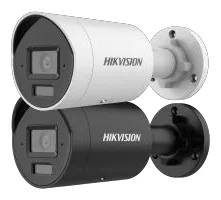
More than resolution, more than the brand, the lens is what decides whether a camera does its job. A 4K sensor behind the wrong focal length still gives you a useless picture: either a person the size of a thumbnail across the street, or a beautiful close-up of the wall six inches away. The fixed cameras we index almost all come in a small set of lens options, and picking the right one is mostly common sense once you know the trade-off.
The one trade-off that matters
Focal length (the “mm” number) sets how wide the camera sees versus how far it can identify. They pull in opposite directions:
- Smaller mm = wider view, shorter reach. More scene, less detail at distance.
- Bigger mm = narrower view, longer reach. Less scene, but you can identify faces and plates further away.
That is the whole thing. Everything else is picking the point on that scale that matches the scene.
| Lens | Roughly covers | Best for |
|---|---|---|
| 2.8 mm | ~100 degrees, wide | Rooms, entrances, tight yards - maximum coverage up close |
| 3.6 / 4 mm | ~80-90 degrees | General purpose - the safe default for most jobs |
| 6 mm | ~55 degrees, narrow | Driveways, car parks, long approaches - reach over width |
(Exact field of view depends on the sensor size, so treat these as ballpark, not gospel. The camera’s datasheet gives the real horizontal angle.)
How to choose in practice
- Start from the scene, not the camera. A doorway or a small yard wants 2.8 mm so you actually see the whole space. A long driveway or a fence line wants 6 mm so a person at the far end is more than a smudge.
- When in doubt, 4 mm. It is the default for a reason: a sensible middle that covers most general surveillance without either extreme.
- Wide does not mean “sees everything well”. A 2.8 mm lens covers a big area, but detail drops off fast with distance. Do not put a wide lens on a job that needs identification at range.
- Match the lens to the pixels-on-target you need. Identification (recognising a face) needs far more pixels on the subject than simple detection (something is there). The narrower lens concentrates your pixels where it matters.
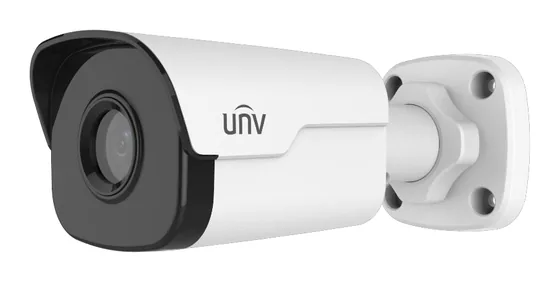
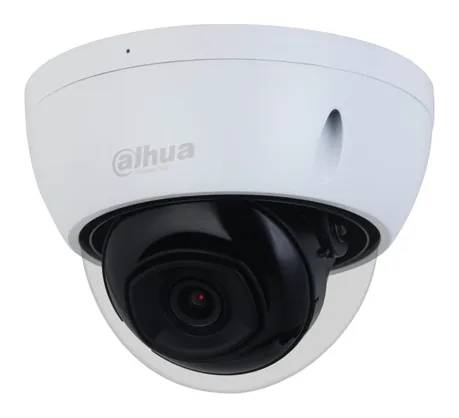
Cameras like the Hikvision DS-2CD2023G2-LI(2U) ship in 2.8, 4 and 6 mm, so the same model can be a wide entrance camera or a narrow driveway camera depending on which you order. Dahua domes such as the IPC-HDBW2441E-S offer 2.8/3.6/6 mm; Uniview’s fixed range like the IPC2122SR3-PF40(60)-C leans to 4 and 6 mm.
Every camera page here lists the lens options straight from the datasheet, so you can confirm which focal lengths a model actually offers before you order. Browse by form factor: bullet, dome, turret. Then the form-factor guide covers the body shape to pair it with.
Parts featured in this guide
Explore the datasheet-verified data
Everything in this guide is backed by the parts we index. Jump straight in: